SUP and Its Meaning Slang Greeting and Common Uses
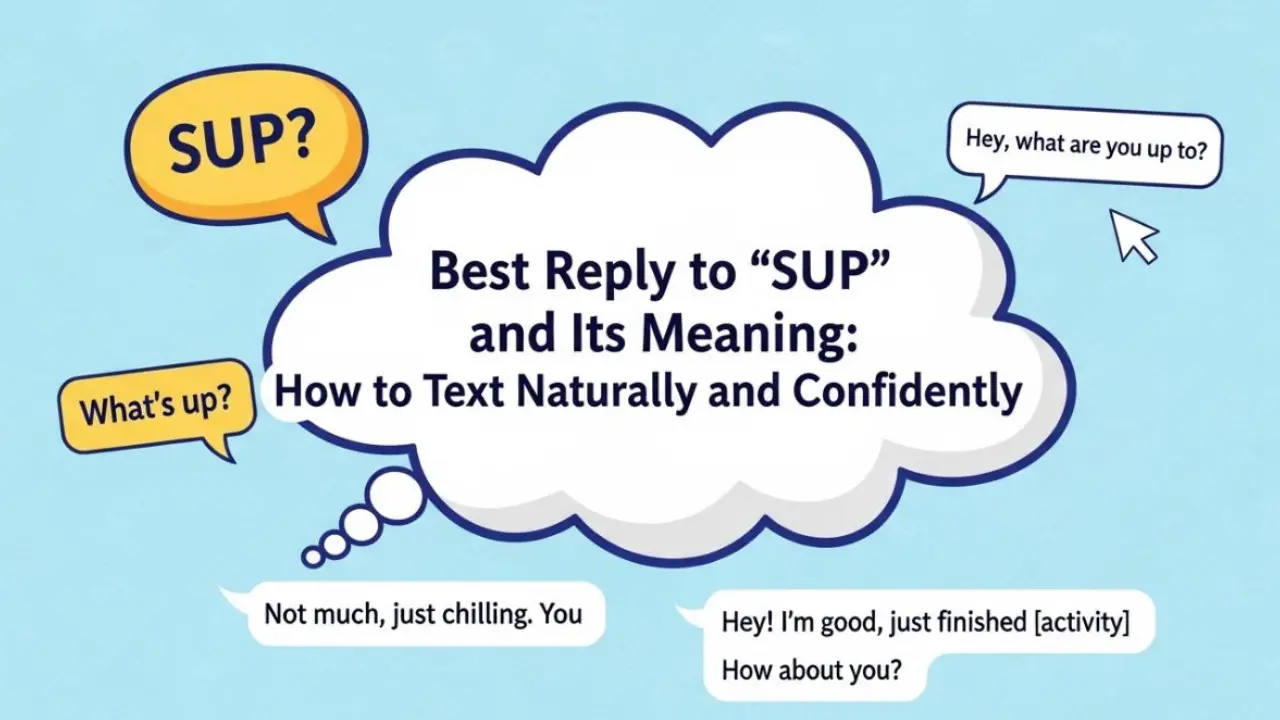
SUP and Its Meaning, Sup is an informal shortened form of what’s up? It is usually a casual greeting that means How are you? or What’s going on? Rather than a literal request for detailed news. In texts, social media messages, and relaxed conversation, it is often written as sup, Sup?, or SUP.
The capitalized form can also be an abbreviation with entirely different meanings. The surrounding conversation matters: a quick sup from a friend is almost certainly a greeting, while SUP in a workplace, technical, or outdoor-sports setting may refer to something else.
What does SUP and Its Meaning?
SUP and Its Meaning, In everyday messaging, sup means what’s up? It is a friendly, low-pressure way to start a conversation or ask what someone is doing.
For example, a person might write, Sup? after seeing a friend online. They may be asking how the friend is, whether they are free to talk, or simply opening a chat. The expected reply is usually brief and casual.
| Message | Plain-English meaning |
|---|---|
| “Sup?” | “What’s up?” / “How are you?” |
| “Hey, sup?” | “Hi, what are you doing?” |
| “Not much, you?” | “Nothing much is happening. How about you?” |
| “Sup with you lately?” | “What has been happening in your life?” |
Where sup comes from
SUP and Its Meaning, “Sup” is a spoken and written shortening of the English phrase “what’s up?” In fast, informal speech, “what’s” may be dropped and “up” can sound like “sup.” The shortened form became common in casual speech and later became especially familiar through texting, online chat, and social platforms.
It is not standard formal English. That does not make it incorrect in every setting; it simply signals an informal tone. Use “Hello,” “How are you?” or “I hope you’re well” when writing to someone you do not know well or in a professional message.
How to reply to sup
SUP and Its Meaning, A natural response depends on whether you want to chat, share an update, or keep the exchange short. You do not need a formal answer.
- “Not much, you?” — a common, friendly reply.
- “Hey! Just finishing work. What’s up with you?” — gives a small update and continues the conversation.
- “Doing well—what’s going on?” — polite and open-ended.
- “Hi! I’m busy at the moment. Is everything okay?” — useful when you think the sender may need something.
- “Nothing much.” — brief and neutral if you do not want to extend the chat.
Because “sup” is usually a greeting, replying with another greeting is fine: “Hey!” or “Hi, how are you?” A longer life update is optional unless the conversation calls for one.
Tone, punctuation, and capitalization
SUP and Its Meaning, The meaning of “sup” stays broadly the same, but its presentation can change the tone. “sup” in lowercase often feels relaxed and conversational. “SUP?” in all caps may show excitement, urgency, or simply the sender’s normal typing style; capital letters alone do not reliably indicate anger.
Adding punctuation can make it read more like a clear question: “Sup?” Without punctuation, “sup” can still work as a greeting. In person, tone of voice and facial expression carry much of the meaning. In a message, the relationship between the two people and the rest of the chat provide that context.
When SUP is not a greeting
SUP and Its Meaning, Uppercase SUP can be an initialism, so it may have a specialized meaning that has nothing to do with “what’s up?” Do not assume every use of SUP is slang.
One common non-slang meaning is stand-up paddleboarding (often shortened to stand-up paddling). In that sport, a person stands on a large board and uses a paddle. A sentence such as “We rented SUP boards” refers to paddleboards, not a greeting.
In other fields, SUP may be an organization-specific or technical abbreviation. Acronyms are not universal: the same letters can stand for different terms in different industries, schools, software systems, and documents. The capital letters, topic, and nearby words are the best clues.
Use context to choose the right meaning
- Text from a friend: “sup” almost always means “what’s up?”
- Beach, lake, or fitness context: “SUP” may mean stand-up paddleboarding.
- Work or technical document: look for a definition in the document or ask the writer what the abbreviation means.
This distinction prevents a common misunderstanding: slang “sup” is a shortened word or greeting, while capitalized “SUP” may function as an acronym.
Is sup appropriate to use?
SUP and Its Meaning, Sup works best with friends, classmates, close coworkers, and people who already communicate casually. It can sound warm and easygoing, especially at the beginning of a text conversation.
It may be too casual for a job application, a message to a teacher or client, a formal complaint, or first contact with someone you do not know. In those situations, choose a greeting that fits the relationship and purpose:
- “Hello, how are you?”
- “Hi [name], I hope you’re doing well.”
- “Good morning. I’m writing about…”
There is no need to avoid “sup” completely in professional spaces where colleagues normally use casual language. Still, it is safer to match the other person’s tone rather than assume informality is welcome.
Common misunderstandings
SUP and Its Meaning, It does not always ask for major news. Although what’s up? can literally ask what is happening, “sup?” is often just a conversational opener. “Not much” is a complete and normal reply.
It is not necessarily an invitation. A person saying “sup” may want to talk, but the greeting alone does not tell you why they reached out. If they have a request, they will usually explain it after you respond.
It is not the same as “’s up” in every sentence. In informal chat, “sup” stands on its own as a greeting. In a sentence such as “What’s up with the schedule?” the phrase is asking about a specific issue, and replacing it with “sup” would sound unnatural.
Examples of natural use
SUP and Its Meaning, These examples show the casual meaning in context:
- A: “Sup?” B: “Not much. Just got home.”
- A: “Hey, sup with you?” B: “I’m studying for an exam. You?”
- A: “Sup, are you free later?” B: “After six, yes.”
- A: “Haven’t heard from you in a while. Sup?” B: “I’ve been busy with school, but I’m good.”
The greeting can appear alone or lead into a more specific question. It is most natural in speech-like, informal communication.
Frequently asked questions
Is SUP and Its Meaning a real word?
SUP and Its Meaning is an established informal spelling and spoken shortening of what’s up. It is common in casual communication but is not generally suitable for formal writing.
Does sup mean how you are?
Often, yes. It can be used much like How are you? but is usually broader and more casual, asking generally what a person is doing or how things are going.
What is the best response to sup?
Not much, you? is a standard response. You can also share a short update, ask what the sender needs, or simply say Hey!
What does SUP mean in water sports?
In water sports, SUP commonly means stand-up paddleboarding or stand-up paddling. It involves riding a board while standing and using a paddle.
Should sup be capitalized?
No. Lowercase sup is common for the slang greeting. Capital letters are optional in a casual message, but SUP may be clearer when it refers to an acronym, such as stand-up paddleboarding.
Conclusion
SUP and Its Meaning depends on context. As casual slang, sup is simply a shortened what’s up? used to greet someone or start a relaxed conversation. When written in capitals, SUP can instead refer to stand-up paddleboarding or another field-specific abbreviation. Read the surrounding words and the setting to tell which meaning is intended.