Iron Maiden Album Covers History Eddie Artwork and Meaning
Iron Maiden album covers have become some of the most famous pieces of artwork in heavy metal history. The British band uses horror, fantasy, war, history, and science fiction to create a strong visual identity. Most covers feature Eddie, the band’s frightening mascot, in a new setting or form. As a result, fans can often recognize an Iron Maiden record before they even read the album title.
History Behind Iron Maiden Album Covers
The story of Iron Maiden album covers began when the band released its self-titled debut album in 1980. Its cover introduced Eddie with wild hair, a thin face, and a frightening expression. Artist Derek Riggs developed Eddie from an earlier character that he had created for his own artwork. Soon, Eddie became closely connected with Iron Maiden’s music and public image.
As the band released more records, Eddie changed with each new theme. He appeared as a killer, prisoner, soldier, pharaoh, cyborg, tree creature, and even a samurai. These changes helped every album feel fresh while keeping the band’s identity easy to recognize. Therefore, the artwork became almost as important to fans as the music itself.
Who Is Eddie the Head?
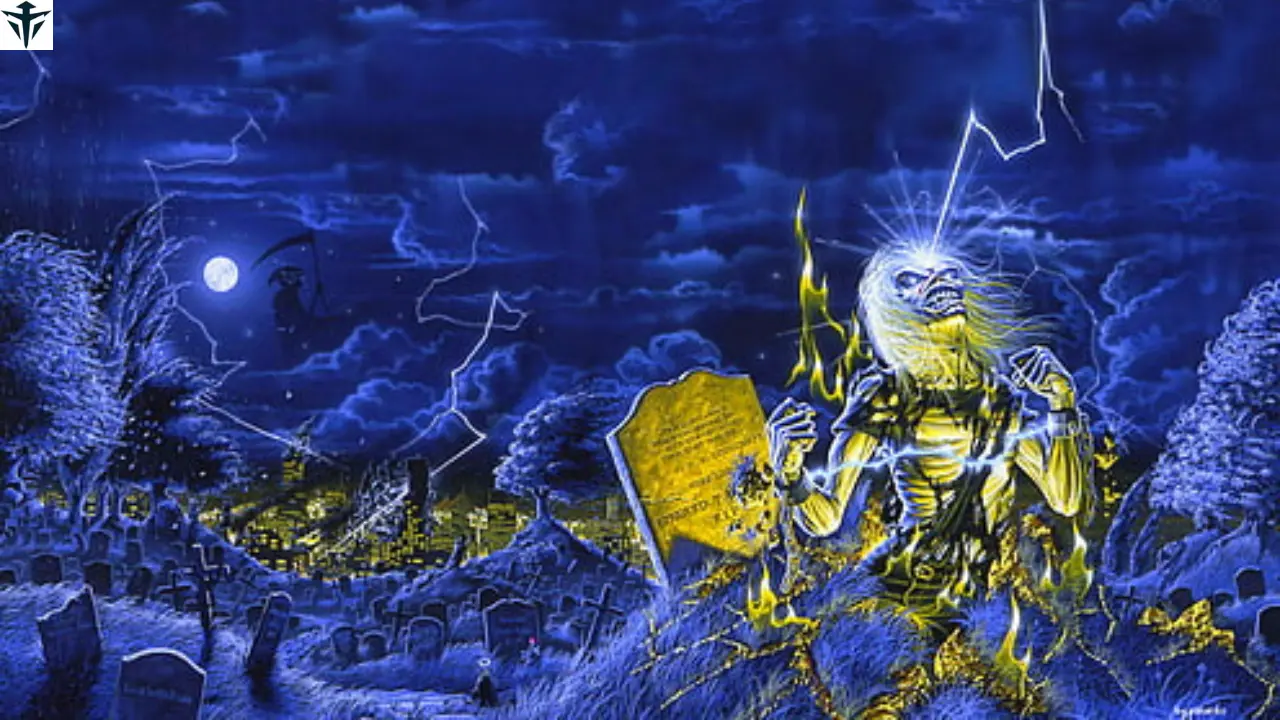
Eddie the Head, usually called Eddie, serves as Iron Maiden’s official mascot. He appears on album artwork, singles, posters, shirts, stage sets, video games, and other band products. Artists often change his clothing and surroundings to match the subject of a particular album. However, his skull-like face and threatening appearance usually remain easy to identify.
Eddie gives the band a visual character that can tell stories without using words. Sometimes he appears violent, while other designs make him look mysterious, powerful, or futuristic. The band also uses him to explore historical and fictional ideas. Because of this creative freedom, Eddie has remained relevant for several decades.
Derek Riggs and His Famous Artwork
Artist Derek Riggs played a major role in creating the classic visual style of Iron Maiden. He designed Eddie and created many of the covers from the band’s early and most successful years. Riggs used detailed backgrounds, hidden references, strange characters, and dramatic scenes in his artwork. Fans often study his covers carefully because they contain small details that are easy to miss.
Riggs worked on records such as Killers, The Number of the Beast, Piece of Mind, Powerslave, and Somewhere in Time. His artwork helped build Iron Maiden’s dark but colorful identity during the 1980s. Later artists continued to develop Eddie in their own styles. Still, Riggs remains strongly connected with the band’s classic look.
Most Iconic Iron Maiden Album Covers
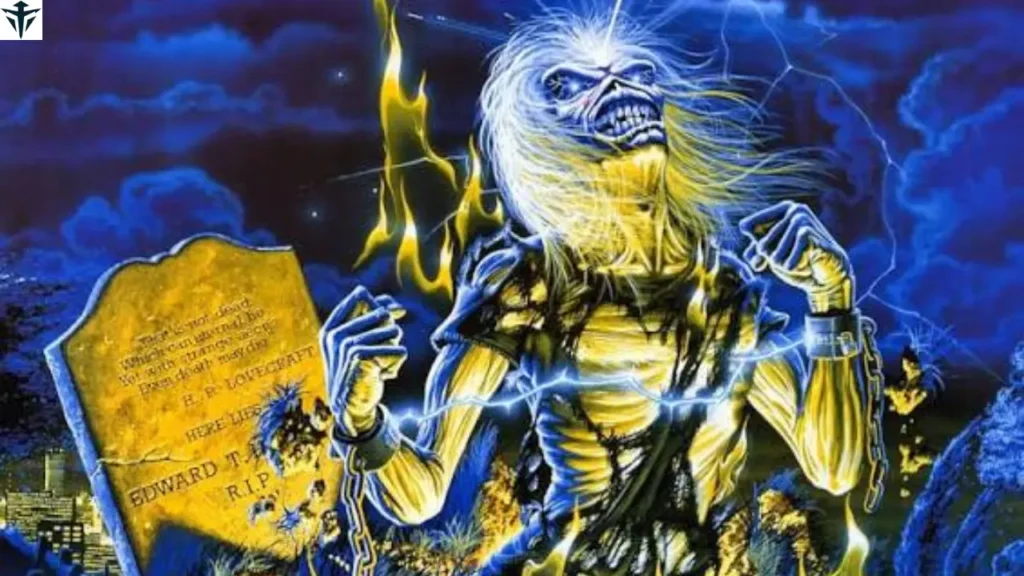
Several Iron Maiden album covers have achieved legendary status among rock and metal fans. The Number of the Beast shows Eddie controlling a devil-like figure like a puppet. Powerslave presents Eddie as a huge Egyptian-style monument surrounded by ancient architecture. Meanwhile, Somewhere in Time places him inside a detailed futuristic city.
Each famous cover connects closely with the mood of its album. The artwork gives listeners an idea of the musical journey before they play the first song. Bright colors also make many of these designs stand out from darker metal artwork. This combination of horror and detailed fantasy created a style that remains easy to recognize.
| Album | Release Year | Main Cover Theme |
|---|---|---|
| Iron Maiden | 1980 | Street-style horror Eddie |
| Killers | 1981 | Eddie holding an axe |
| The Number of the Beast | 1982 | Eddie and the Devil |
| Piece of Mind | 1983 | Chained prisoner Eddie |
| Powerslave | 1984 | Ancient Egyptian Eddie |
| Somewhere in Time | 1986 | Futuristic cyborg Eddie |
| Seventh Son of a Seventh Son | 1988 | Surreal frozen Eddie |
| Fear of the Dark | 1992 | Eddie as a tree creature |
| The Final Frontier | 2010 | Alien-style space creature |
| Senjutsu | 2021 | Samurai-inspired Eddie |
The Number of the Beast Cover
The Number of the Beast features one of the best-known Iron Maiden album covers ever created. The artwork shows Eddie holding a puppet version of the Devil, while the Devil controls a smaller Eddie below. This strange scene creates the idea that power and control may continue through several levels. Its bright blue, red, and black colors make the design especially memorable.
The cover also matched the supernatural themes found in parts of the album. However, Iron Maiden often used horror as storytelling and entertainment rather than as a direct statement of belief. Eddie’s dramatic pose gives the artwork a comic-book style. Therefore, the cover became one of the strongest visual symbols of the band’s early success.
Powerslave and Ancient Egyptian Artwork
The Powerslave cover takes Eddie into the world of ancient Egypt. He appears as a massive stone pharaoh above a temple filled with statues, symbols, and detailed walls. The design connects well with songs that explore history, power, death, and human ambition. It also shows how Iron Maiden moved beyond simple horror artwork.
The huge structure gives Eddie the appearance of an ancient ruler or god-like figure. At the same time, the small details encourage fans to look closely at the complete artwork. The cover became popular on posters, shirts, and other merchandise. Today, many fans consider Powerslave one of the strongest visual designs in heavy metal.
Somewhere in Time and the Cyberpunk Style
Among all Iron Maiden album covers, Somewhere in Time contains an exceptional amount of visual detail. The 1986 artwork transforms Eddie into a cyborg standing inside a futuristic city. Neon signs, flying vehicles, buildings, advertisements, and hidden references fill almost every part of the scene. This busy design gives viewers something new to discover each time they study it.
The futuristic artwork also matches the album’s interest in time, technology, distance, and human experience. Eddie looks like a dangerous science-fiction character while still keeping his familiar face. Moreover, the city contains references to Iron Maiden’s past and wider history. This makes the cover especially enjoyable for long-time fans.
Seventh Son of a Seventh Son Artwork
Seventh Son of a Seventh Son presents one of the strangest versions of Eddie. His body appears partly missing while his upper form floats above an icy and unreal landscape. Flames rise from his head, while he holds a strange object in his hand. The artwork gives the album a supernatural and dream-like appearance.
This style fits the record’s themes of prophecy, destiny, good, evil, and special powers. Unlike the crowded design of Somewhere in Time, this cover uses more open space. The unusual landscape creates a feeling of mystery and isolation. As a result, it stands apart from many other designs in the band’s collection.
How Iron Maiden Album Covers Changed Over Time
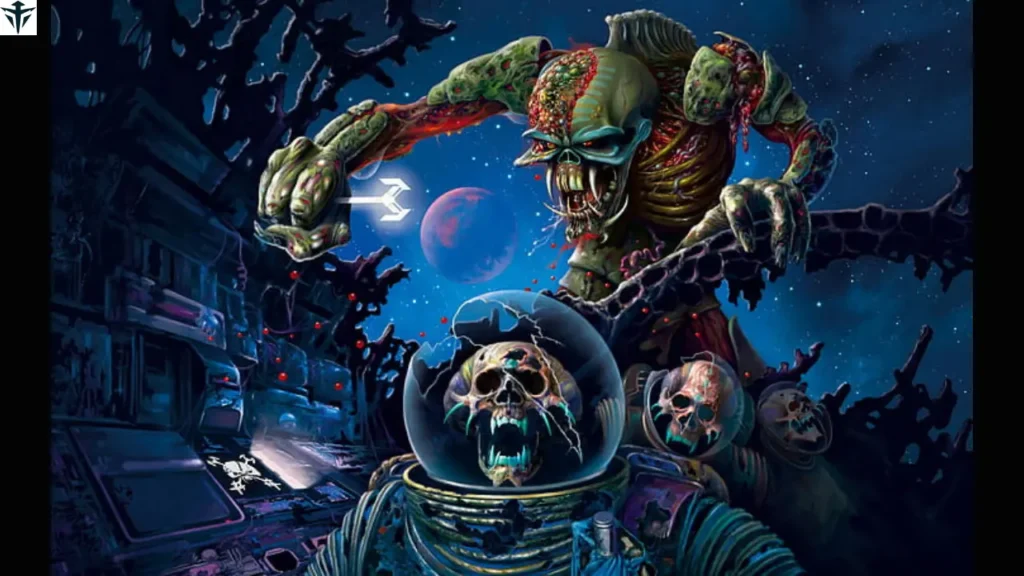
The style of Iron Maiden album covers changed as technology and artistic methods developed. Early artwork relied heavily on detailed painted illustrations, while some later releases used digital techniques and computer-created elements. Different artists also brought new ideas to Eddie and his surroundings. Even so, the band continued to use its mascot as the main connection between different eras.
Later albums explored themes such as war, tribal cultures, outer space, ancient civilizations, and Japanese warriors. The Book of Souls gave Eddie a Mayan-inspired appearance, while Senjutsu turned him into a samurai. These designs prove that the character can adapt to almost any creative theme. Therefore, Eddie continues to give the band a consistent identity without making every cover look the same.
Why These Covers Matter to Heavy Metal
Iron Maiden album covers helped show that album artwork could become an important part of a metal band’s storytelling. Fans did not simply buy the records for music because many also enjoyed studying Eddie’s latest appearance. Large vinyl record sleeves made the detailed paintings even more impressive. Consequently, Iron Maiden developed a visual world that extended far beyond its songs.
The artwork also helped create a strong connection between generations of listeners. New fans may first notice Eddie on a shirt, poster, game, or album before discovering the band’s music. Older fans can often connect a particular Eddie design with a period in their lives. This emotional and visual connection gives the artwork lasting cultural value.
Final Thoughts
For more than four decades, Iron Maiden album covers have combined music, storytelling, horror, history, fantasy, and detailed artwork. Eddie has appeared in countless forms, yet he always remains connected with the identity of Iron Maiden. Classic designs such as Powerslave and Somewhere in Time continue to attract attention from fans and collectors. Their creativity proves how powerful album artwork can become when artists build a consistent visual story.
Iron Maiden continues to treat its cover art as an important part of every new release. The band changes Eddie to match new musical ideas while respecting its long visual history. Because of this approach, its artwork remains recognizable across several generations. Few heavy metal bands have created a visual identity as lasting and influential as Iron Maiden.