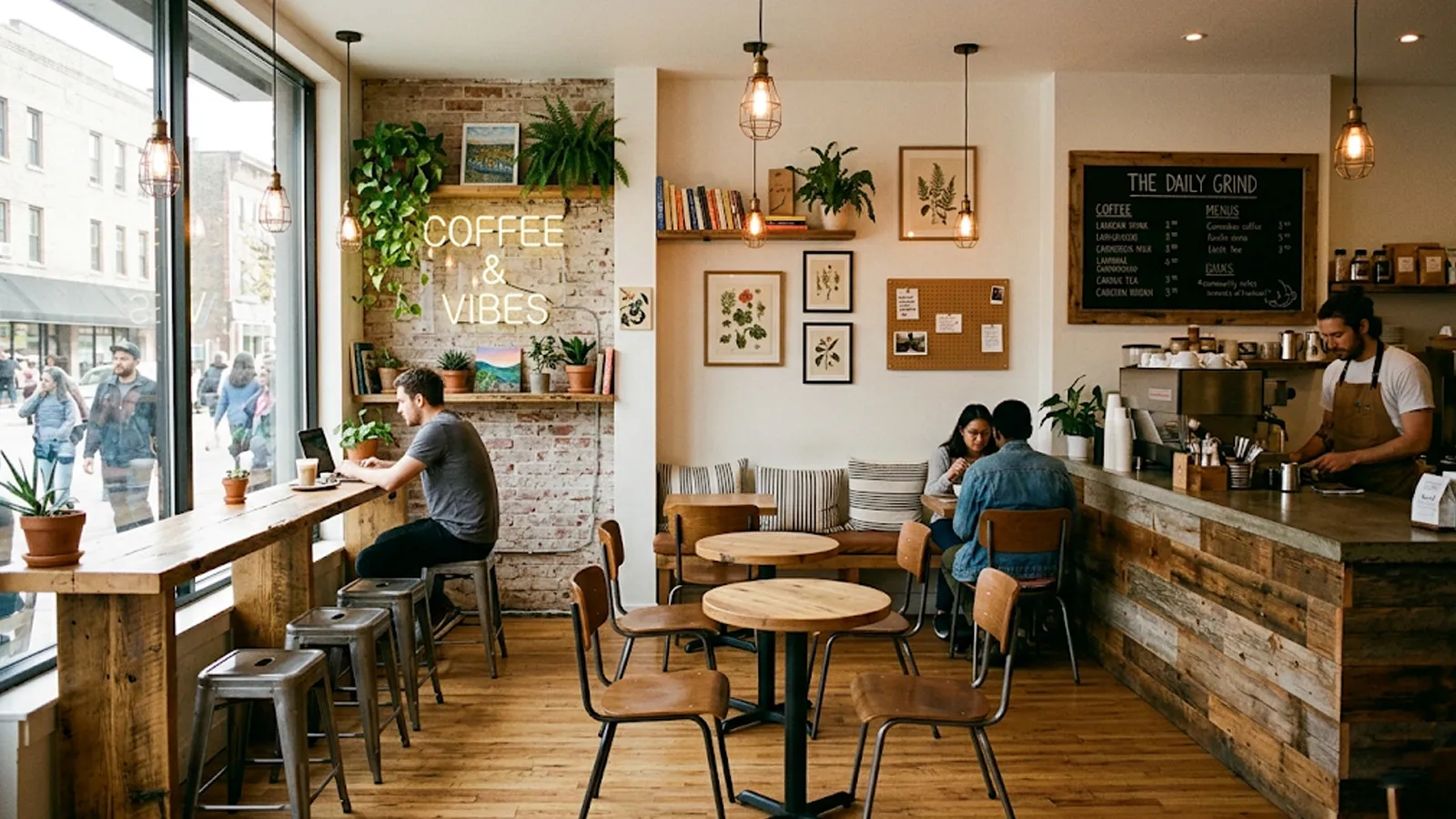
What a Character Cafe Needs From Restaurant Chairs That a Normal Cafe Does Not
A character cafe looks like an ordinary cafe with better decoration, and it operates nothing like one. The room hosts people in elaborate costume. The guests photograph everything constantly, the seating is part of the set rather than furniture in front of it, and the whole thing has to be reset between sessions because the theme changes.
Every one of those conditions places a demand on restaurant chairs that a normal cafe never encounters. Operators who furnished from a standard catalog discover the mismatch within a season, usually in the form of damage nobody anticipated and photographs that do not work.
Costume Changes the Seat Dimensions Required
Start with the physical fact that governs most of the rest.
Guests in cosplay are not the same shape as guests in ordinary clothes. Wide skirts, structured coats, wings, tails, props and armour all add footprint, and none of it compresses the way fabric does.
A seat that comfortably holds a person in jeans will not hold the same person in a costume with a bustle. Armrests become an obstruction rather than a support. Chair backs that curve inward trap anything worn on the back.
The specification that works is armless, with a flat or gently curved back, and a seat width noticeably wider than a standard cafe chair. That is a chair a normal cafe would consider oversized and a character cafe considers minimal.
The Chair Is in Every Photograph
The second demand is visual and it is more consequential here than anywhere else in hospitality.
Guests at a character cafe photograph constantly, usually of each other, usually seated, usually at close range. The chair is in the frame every time, behind the subject, at exactly the height that fills the background.
That makes the chair back a set element. A high back reads as a wall behind the subject. A slat back reads as texture. A dark chair against a light wall frames the person, and a chair close in tone to the wall disappears, which is frequently what the room actually wants.
Choosing without knowing which effect you are choosing produces thousands of images with something slightly wrong in them, distributed to exactly the audience the venue depends on.
Everything Gets Moved Between Sessions
The third demand is operational and it is where cheap seating fails fastest.
Character cafes run in sessions, and the room is reconfigured between them: different table groupings, different orientation, sometimes different furniture entirely for a different theme.
That means chairs are handled several times a day, every day, by staff who are also changing costume and resetting the room to a schedule. Weight and stackability stop being conveniences. A chair over fifteen pounds costs real time on every reset, and a chair that does not stack consumes storage the venue does not have.
Props and Makeup Attack the Upholstery
The fourth demand is about contamination and it is genuinely unusual.
Costume makeup transfers. Body paint transfers. Wigs shed fibre. Props are frequently made from materials that mark. Ordinary cafe upholstery is specified for food spills and copes badly with pigment.
The specification that survives is a tight-weave or coated fabric with no seam across the seat face and nothing that traps fibre. Anything with a welt across the sitting area holds material no cloth reaches in one pass, and that becomes permanent within a few months.
Padded Seating Carries a Compliance Layer
There is a requirement here that applies regardless of how theatrical the room is.
Any padded seating in a commercial setting falls under the Consumer Product Safety Commission’s requirements for upholstered furniture. A venue with costumed guests, open flames on birthday desserts and a great deal of synthetic fabric should be more interested in that than most.
Documentation is the practical issue. A contract supplier can evidence conformance. A prop-shop bench built for the set cannot, and a venue that mixes the two has an inconsistent answer if anybody asks.
The simplest position is to buy every padded item from a supplier who can produce paperwork, and to keep the set build to things nobody sits on.
Access Is Harder in a Themed Room
The accessibility requirement does not soften because the room has a concept.
Under the 2010 ADA Standards, a proportion of dining surfaces must offer compliant knee and toe clearance and be dispersed rather than clustered. Themed rooms fail this more often than plain ones, because fixed set-build seating and decorative table bases both obstruct exactly the space the requirement protects.
Designing one or two positions with a genuinely clear underside, in the good part of the room, solves it. Doing it after the set is built rarely does.
What the Specification Looks Like
For an operator furnishing a character cafe rather than adapting a cafe specification:
- Armless chairs with a seat width above standard, to accommodate costume
- Flat or gently curved backs, with nothing that catches on what guests wear
- Chair backs chosen deliberately for how they read behind a seated subject
- Under fifteen pounds, stacking at least six high, with stated stacked height
- Tight-weave or coated upholstery, no seam across the seat face
- Documented flammability conformance for every padded item, set pieces included
- At least two accessible positions with clear undersides, in the good section
Why the Standard Catalog Fails Here
The reason a normal cafe specification does not transfer is that it is written for a guest who is sitting, eating and leaving.
A character cafe guest is performing, photographing, wearing something structural and staying for a session rather than a coffee. The chair is simultaneously furniture, a set piece and a photographic background, and it is handled by staff four times a day.
Operators who write the specification around those four roles get seating that lasts and images that work. Operators who order from a cafe catalog get chairs that are too narrow, too heavy, in the wrong tone behind every photograph, and marked with makeup by the end of the first quarter.