Reply for All the Best Polite and Natural Responses 2026
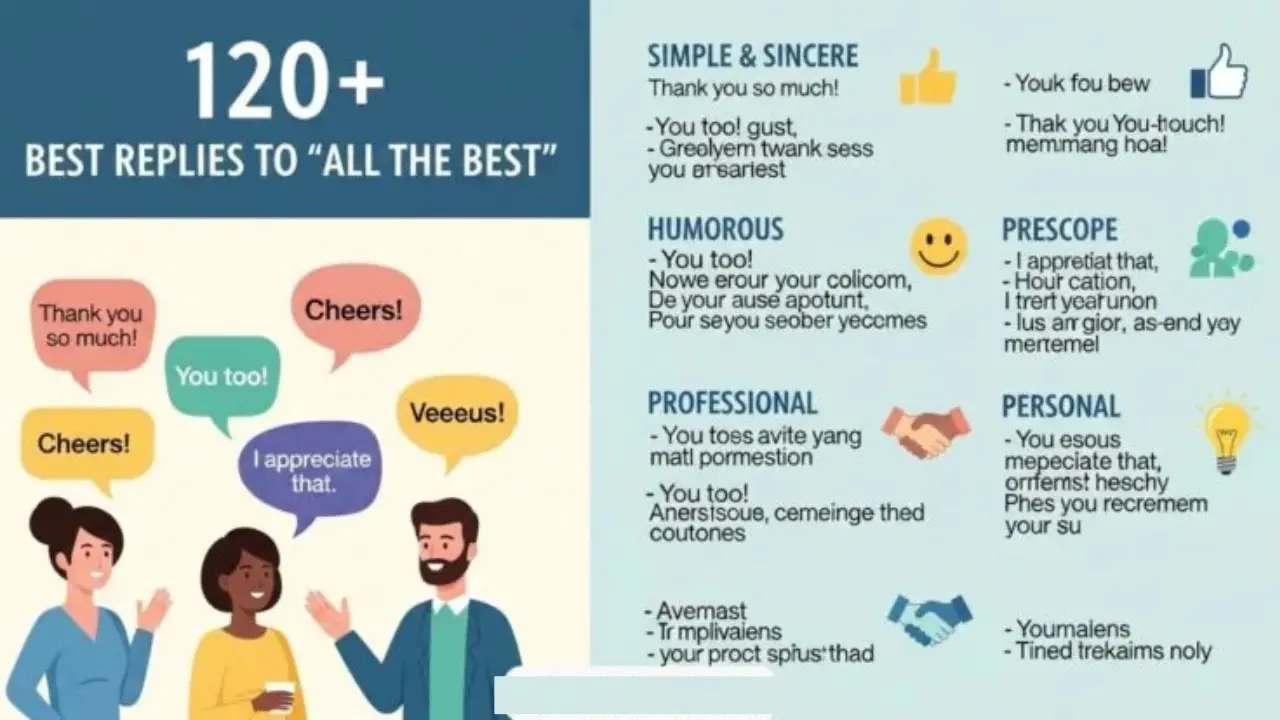
A good reply for all the best is usually simple: thank the person, acknowledge their kindness, and, if it feels right, return the wish. “Thank you, I really appreciate it” works in almost every situation. You can make it warmer, more formal, or more personal depending on who sent the message and what you are preparing for.
Quick replies to Reply for All the Best
Reply for All the Best, For most conversations, a short thank-you is enough. Choose one of these replies when you want to respond quickly and politely.
- Thank you!
- Thank you so much.
- Thanks, I really appreciate it.
- That’s very kind of you.
- Thank you for your wishes.
- Thanks! I’ll do my best.
- Thank you—fingers crossed!
- Thanks a lot. That means a lot to me.
How to choose the right reply for all the best
Reply for All the Best, The right response depends on your relationship with the sender, the setting, and whether you want to continue the conversation. A brief thank-you is appropriate for nearly anyone. A longer reply fits close friends, family members, mentors, or colleagues who know why the occasion matters.
| Situation | Natural response |
|---|---|
| Casual message from a friend | “Thanks! I really appreciate it.” |
| Support before an exam or interview | “Thank you! I’m a little nervous, but I’ll do my best.” |
| Professional message | “Thank you for the encouragement. I appreciate your kind wishes.” |
| Message from someone facing a similar event | “Thank you, and all the best to you too!” |
| Close friend or family member | “Thank you so much. Your support means a lot.” |
Replies for specific occasions
Reply for All the Best, Adding a small detail about the occasion makes your response sound more personal. There is no need to explain too much; one clear sentence is often enough.
Before an exam
When someone wishes you well before a test, they are usually trying to calm and encourage you. You can show appreciation while keeping the tone hopeful.
- “Thank you! I’ve prepared well, so I’m hoping for the best.”
- “Thanks so much. I’ll give it my best effort.”
- “Thank you—your encouragement helps.”
- “Thanks! I’m feeling more confident now.”
Before a job interview
Reply for All the Best, For an interview, a response can be friendly but composed. If the sender is a colleague, recruiter, manager, or mentor, a professional tone may fit better.
- “Thank you. I appreciate the encouragement.”
- “Thanks very much. I’m looking forward to the opportunity.”
- “Thank you! I’ll be sure to prepare well.”
- “I appreciate your kind wishes. I’ll do my best.”
For a new job, move, or major change
Big transitions often bring mixed feelings. A reply can recognize both the excitement and the support behind the message.
- “Thank you so much. I’m excited about this next step.”
- “Thanks! It’s a big change, but I’m looking forward to it.”
- “That’s very kind. I appreciate your support.”
- “Thank you—and please keep in touch.”
Before a competition, performance
These occasions call for confident, upbeat answers. A short response helps you accept the encouragement without sounding overly formal.
- “Thanks! I’m ready to give it my all.”
- “Thank you. I’m excited and a bit nervous!”
- “Thanks for cheering me on.”
- “I appreciate it. Wish me luck!”
When someone is wishing you well during a difficult time
Sometimes “all the best” follows upsetting news, a health concern, a personal setback, or an uncertain situation. A plain, genuine reply is usually best. You do not need to share personal details unless you want to.
- “Thank you for thinking of me.”
- “I appreciate your kindness.”
- “Thank you. Your support means a lot right now.”
- “That is very thoughtful of you. Thank you.”
Formal and professional responses
Reply for All the Best, In an email or workplace message, avoid replies that are too casual unless you already have an informal relationship with the sender. A courteous sentence is enough, and it can still sound warm.
- “Thank you for your kind wishes. I appreciate your support.”
- “Many thanks for the encouragement.”
- “Thank you. I am grateful for your thoughtful message.”
- “I appreciate your encouragement and will do my best.”
- “Thank you for reaching out. Your support is sincerely appreciated.”
Warm replies for friends and family
Reply for All the Best, With people close to you, it is natural to be more expressive. Mentioning their support, excitement, or your feelings can make the reply more meaningful.
- “Thank you! I’m lucky to have you cheering for me.”
- “Aww, thank you so much. That means a lot.”
- “Thanks! I needed that encouragement today.”
- “Thank you, you’re so sweet.”
- “Thanks! I’ll let you know how it goes.”
- “Thank you. Your faith in me gives me confidence.”
Can you say all the best to you too?
Reply for All the Best, Yes, “All the best to you too” is correct and natural when the other person also has an upcoming challenge, plan, or change. It is a kind way to return the good wish.
If they are only offering support and have no known event ahead, you can still say “Wishing you all the best too,” but it may sound a little more general. In that case, “Thank you, that’s very kind of you” is often the smoother choice.
Useful variations include:
- “Thank you, and all the best to you too!”
- “Thanks! Wishing you the very best as well.”
- “I appreciate it. Good luck with your plans too!”
- “Thank you—same to you!”
Reply for All the Best, What all the best means
Reply for All the Best, “All the best” means “I wish you every success and happiness” or “I hope things go well for you.” It is an established English expression used as a farewell, a message of encouragement, or both.
The phrase can be used on its own: “All the best!” It may also appear as part of a longer sentence, such as “All the best for your interview” or “Wishing you all the best in your new role.” Its tone is usually positive, caring, and polite.
Common mistakes to avoid
A response does not have to be perfect. Still, a few choices can make it sound more natural and considerate.
- Do not overthink a brief message. “Thank you” is a complete and polite response.
- Match the sender’s tone. A playful friend may appreciate “Thanks, I’ll need it!” while a supervisor may be better answered with a professional thank-you.
- Avoid a copied-sounding reply. Choose words you would normally use rather than forcing a grand statement.
- Return the wish only when it fits. “All the best to you too” works best when the other person has something ahead of them.
- Do not feel required to give an update. Saying “I’ll let you know” is kind, but only promise it if you mean it.
Ready-to-send message examples
These complete examples can be adapted for texts, chats, cards, or emails.
- “Thank you so much for your kind wishes. I really appreciate them.”
- “Thanks! I’m doing my best and hoping everything goes well.”
- “That’s very kind of you. Thank you for the encouragement.”
- “Thank you! I’m excited for what comes next.”
- “I appreciate it. I’ll let you know how it turns out.”
- “Many thanks. Your support means a great deal to me.”
- “Thank you, and I wish you all the best too.”
- “Thanks! Keeping my fingers crossed.”
Frequently asked questions
What is the best short reply to Reply for All the Best?
Reply for All the Best, Thank you, I really appreciate it is a safe, warm reply for almost any situation. For a more casual exchange, Thanks! is perfectly acceptable.
Is Thanks, same to you a correct response?
Yes. It is casual and natural, especially if the other person also has an important event or plan. Thank you, same to you! is slightly clearer and warmer.
How do I reply to All the best in a formal email?
You can write, Thank you for your kind wishes. I appreciate your encouragement. This is professional without being stiff.
Do I need to reply to All the best?
A reply is not always required, particularly in a group chat or on a public post. But a brief thank-you is a thoughtful choice when someone has sent you a personal message.
Can I reply with Wish me luck?
Yes, especially with friends or family. It is light and conversational: Thanks! Wish me luck. In formal situations, I appreciate your encouragement is usually a better fit.
A simple way to respond
The most natural reply for all the best is one that shows genuine appreciation. Start with Thank you, then add a short personal line if the relationship or occasion calls for it. Whether you say Thanks, I’ll do my best, Your support means a lot, or simply Thank you, a sincere response is always enough.